Showing posts with label General Sciences. Show all posts

Wednesday, November 08, 2006

Brain Injury May Occur Within One Millisecond After Head Hits Car Windshield


Sagittal view of compressive pressure in head model (glass at right); pressure highest at impact of Coup site. Pressure scale -- red: 30 atmospheres, blue: 1 atmosphere. (Image courtesy of Sandia National Laboratories)

Research by a Sandia National Laboratories engineer and a University of New Mexico Health Sciences Center neurologist shows that brain injury may occur within one millisecond after a human head is thrust into a windshield as a result of a car accident.

This happens prior to any overall motion of the head following impact with the windshield and is a new concept to consider for doctors interested in traumatic brain injury (TBI).

Paul Taylor of Sandia's Multiscale Computational Materials Methods Department and Corey Ford, neurologist at UNM's Department of Neurology and MIND Imaging Center, made the discovery after modeling early-time wave interactions in the human head following impact with a windshield, one scenario leading to the onset of TBI.

Sandia is a National Nuclear Security Administration laboratory.

TBI is associated with loss of functional capability of the brain to perform cognitive and memory tasks, process information, and perform a variety of motor and coordination functions. More than five million people in the U.S. live with disabilities associated with TBI.

"In the past not a lot of attention was paid to modeling early-time events during TBI," Taylor says. "People would - for example - be in a car accident where they hit their head on a windshield, feel rattled, go to an emergency room, and then be released. We were interested in why people with head injuries of similar severity often have very different outcomes in memory function or returning to work."

More notice has been given to TBI in recent years because of the large number of U.S. soldiers returning home from Iraq with head injuries caused by blast waves from discharged improvised explosive devices.

Taylor says that modeling brain injury is a far more humane way to study scenarios leading to TBI than the traditional trial-and-error approach using laboratory animals.

The two researchers started by importing a digitally processed, computed tomography (CT) scan of a healthy female head into the Sandia-developed shock physics computer code, CTH. The CT scan was digitally processed to segment all soft tissue and bone into three distinct materials - skull, brain, and cerebral spinal fluid (CSF).

Computer models were then constructed representing the skull, brain, CSF, and windshield glass. The simulations were run on Sandia's Thunderbird parallel architecture computer using 64 processors for each simulation.

"The results of our simulations demonstrate the complexities of the wave interactions that occur among the skull, brain, and CSF as the result of the frontal impact with the glass windshield," Taylor says.

The modeling represents what would happen to an unrestrained person hitting the windshield of an automobile in a 34 mph head-on collision with a stationary barrier.

In discussions between Taylor and Ford, it became apparent that different types of cell damage might occur depending on the type of stress to which the cells are exposed. "Isotropic stress," commonly called pressure stress, imposes density changes that can damage a cell's internal structure. "Shearing stress" acts as a tearing mechanism that damages the cell wall and membranes, giving rise to apoptosis, or cell death. Both are likely at play in most incidents leading to TBI.

Each type of stress is displayed on two different views of the brain - the sagittal view - where the brain is cut between the left and right hemispheres - and an axial view in a plane perpendicular to the longitudinal axis of the body just above the eyes and ears.

"Through our modeling we were able to predict early-time stress focusing within the brain during an impact event. However, we have yet to identify what specific levels of stress will lead to TBI," Taylor says.

"This is the focus of our future research effort. Furthermore, our current models simulate the brain as homogeneous. We want to create a higher-resolution simulation capability that better represents the various portions of the brain to provide detailed specificity of our results."

Such capabilities may allow Taylor and Ford to have a better understanding of how the early-time stress contributes to TBI and aid in the design of better protection devices such as headgear for sports and military personnel.


Wednesday, September 06, 2006

Wardrobe for the Weightless: Space Inspires Fashion Show

By Leonard David
Senior Space Writer
posted: 09 June 2006
04:45 pm ET


Maybe musician Donald Fagen was onto something. In his classic 1982 song, I.G.Y. (What A Beautiful World), the sometime-Steely Dan collaborator sang of adventurers buying a ticket to the wheel in space and a world with spandex jackets for everyone.

Well, while the wheel is still in the drawing stages, the Japanese Aerospace Exploration Agency (JAXA) and Rocketplane Ltd., along with numbers of designers and artisans, have taken it upon themselves to improve on the spandex: a Hyper Space Couture Design Contest.

Runway fashion

The multi-part competition has been underway for several months, patterned to elicit space tourism fashion ideas. A key rule is that suborbital wear submittals must be functional and scientific—but don’t forget a stylish chic.

“Rocketplane made the fundamental design decision to fly in a true ‘shirtsleeve environment’ very early in the development program,” explained Chuck Lauer, Vice President of Business Development for Rocketplane, based in Oklahoma City, Oklahoma.

Rocketplane’s XP vehicle will accommodate a pilot and three passengers. The fighter-sized craft is powered by both turbojet engines and a rocket engine. The vehicle is being built to accelerate to speeds of some 2,386 miles per hour (3,500 feet per second) and reach altitudes in excess of 330,000 feet (100 kilometers). Flying that suborbital profile, all onboard will be weightless for three to four minutes during the trek to the edge of space.

“In our view, not having to wear bulky pressure suits, helmets or breathing masks will enhance the customer’s space flight experience,” Lauer told SPACE.com.

Say no to Nomex

It was Misuzu Onuki, Asia Liaison for the Space Frontier Foundation and Rocketplane's Asian Business Representative, who first identified the need for design, creative expression and personal preference to become a part of the customer’s individual space flight choices.

“We were stuck in the ‘old school’ way of thinking about space flight clothing. We assumed that our choices were limited to picking our own Midnight Blue company color for the standard Nomex military flight suit, with our own logo patches in place of the NASA meatball,” Lauer pointed out.

The Space Couture Design Contest—organized by Ms. Onuki, Eri Matsui, a fashion designer based in Tokyo, and their colleagues in JAXA and the fashion industry—have spurred a fresh and exciting look at what the possibilities for personal space wear really can be.

The contest is zipping forward to having the top 10 finalists produce and test their personal creations, Lauer explained. The winning designs will become part of the catalog of Rocketplane Official Space Wear.

“Ultimately, we would like to see additional design contests for the European and American markets and a whole line of winning space wear fashion designs become a part of our catalog,” Lauer said.

Casual wear for space

The space wear contest is for the first generation of space tourism, Onuki explained.

“So far, space tourism wear has been not so considered … though space tourism is very popular among the general public,” Onuki observed. “However, wear for space tourism is one of the important elements to make space tourism very dramatic and exhilarating.”

Onuki told SPACE.com that she has been engaged in research geared toward casual wear for space over the last five years.

“Though it is easy to ask a famous fashion designer to design space suits, I chose another way to encourage mass market public attention to space tourism by performing the competition,” Onuki added. “To do that, we got a new pleasure. I was sure that it must be interesting to see the design pictures which embody people’s image and dreams towards personally experiencing space flight.”

Catwalk in space

Onuki said that, in working with fashion designer, Ms. Matsui, the intent is to cross-thread mathematics, science, art, and physics with fashion.

To date, there have been several kickoff events, as well as fashion shows to stir interest in the multi-step contest. At the end of March, contest officials had received 882 drawings by 365 individuals. Last month, the top 10 designs plus three alternate designs were picked. The actual winner, second and third place will be selected later this year.

“I think that it will be very hard to select one as the ultimate winner,” Onuki admitted.

Contest organizers plan to perform the first space fashion show—“Catwalk in Space”—this autumn hosted by Space Travellers of Germany, as well as German and Japanese media.

A Zero G Wedding Dress designed by Matsui, as well as the top 10 designers garbed in their own outfits, will float in weightlessness courtesy of a parabolic-flying Russian Ilyushin 76 aircraft.


Tuesday, June 13, 2006

Spaceport Singapore: One-Stop Shopping for the Future Space Tourist

By Tariq Malik
Staff Writer
posted: 13 June 2006
06:46 am ET


From Space

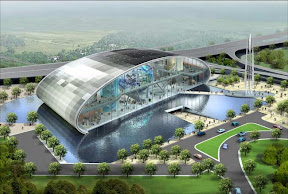
SINGAPORE -– An effort to build a suborbital spaceport destination to cater to space-hungry tourists and families is pushing forward in Singapore, where aviation authorities are developing a homegrown set of regulations for commercial spaceflight.

The Civil Aviation Authority of Singapore (CCAS) is laying the groundwork here for the rules to govern flights out of Spaceport Singapore, a planned $115 million (SGD $191 million) project to offer suborbital spaceflights and a host of other experiences to adventure-seeking tourists.

"Commercial passenger suborbital spaceflight is very new to Singapore and for [the] CAAS," said Constanze Chia, assistant manager of corporate communications for Singapore’s aviation authority, in a statement. "We are in the initial stage of formulating the appropriate set of regulations."

Slated to open in 2009, Spaceport Singapore is the brainchild of a consortium of investors and the Virginia-based adventure tourism firm Space Adventures, which announced the project – alongside plans for a United Arab Emirates spaceport and a fleet of suborbital Explorer spacecraft– earlier this year.

"We want to have different experiences available in as many different places as possible," said Eric Anderson, president and CEO for Space Adventures, in a telephone interview. "We’re really hoping to just get out there and give people the opportunity to experience space."

Space Adventures also offers rides aboard Russian MiG jet aircraft, a modified jet that simulates weightlessness during parabolic flights, and $20 million trips to the International Space Station (ISS). The firm has also announced plans for $100 million trips around the Moon.

Japanese entrepreneur Daisuke Enomoto is set to ride a Russian Soyuz spacecraft to the ISS in September as the fourth tourist to the orbital laboratory. While orbital spaceflight has been the realm of astronauts and millionaires, Spaceport Singapore hopes to make access to suborbital space a more affordable experience.

A one-stop space destination

While the UAE spaceport would host suborbital flights, the Singapore base near Changi International Airport is expected to offer a wider range of services including:

  • A five-day astronaut training regime for suborbital spaceflights aboard an Explorer vehicle.
  • Flight simulators for jet and suborbital vehicles, as well as parachute and ejection seat trainers.
  • A neutral buoyancy tank to allow customers a taste of spacewalk training.
  • Aircraft flights to simulate weightlessness or the extreme speed of a high-performance jet.
  • An interactive center where visitors can watch others undertake astronaut training activities, experience flight simulators and rides, sample Earthbound and astronaut food in a restaurant, or visit the ever-present gift shop.
  • A Space Adventures Camp for children.

"It’s a lot like a pyramid to cater to all ages and all price ranges," said Nick Marrett, founder of the Singapore-based firm Octtane and a spaceport consortium member, in an interview.

Michael Lyon, project manager for Spaceport Singapore, told SPACE.com that he hopes to include a virtual observatory in the visitor’s center where users could tap into remote telescopes for live views of the night sky.

"Spaceport Singapore is not just about taking people to space," Lyon said, adding that basing a spaceport at Singapore’s Changi airport allows spaceflights to launch over water, rather than land, reducing the risk for people on the ground. "It’s much more dynamic and interactive."

Space Adventures and consortium members have been working with Singapore authorities – ranging from aviation and defense personnel to the Singapore Tourism Board – to develop Spaceport Singapore and received tentative approval for the project last year, despite lacking all of the funding required to push forward, consortium members said.

"We expect to raise the necessary funds by the end of the year," Marrett said.

Marrett said that once the initial $115 million has been raised, construction of Spaceport Singapore could begin about six months later.

A new kind of port city

Singapore tourism officials are hopeful that the planned spaceport will be both and economic and image boon for a nation-state that drew a record 8.94 million visitors in 2005.

"We see Spaceport Singapore as having the potential to become an iconic attraction that would a appeal to a range of audiences," said Chang Chee Pey, director of cluster development, sightseeing and cruise for the Singapore Tourism Board, told SPACE.com in an e-mail interview. "We believe Spaceport Singapore will also enhance Singapore’s international reputation for cutting edge technology and innovation."

More than 500,000 annual visitors are expected at the planned spaceport during its first 30 months of operation, and the project itself could generate up to 5,000 direct or indirect jobs and about $2.3 billion (SGD $3.6 billion in economic benefits during its first decade, Chang said.

"There’s really only three countries in the world where you can take a spaceflight (the U.S., Russia and China) and they’re all superpowers," said Lyon. "Singapore would be the first public spaceport located in a major city, rather than out in the desert or remote areas."

In addition to the planned spaceport, work is already underway for two casino resorts to attract more tourists and revenue to Singapore.

"Singapore is at a turning point in terms of tourism," Lyon said.

The project also builds on Singapore’s reputation as a port city, first for sea-bound ships berthing at its sheltered harbor, then later for its international airport, spaceport officials said.

"They have one of the premiere seaports in the world and their airport is one of the best in the world as well," Anderson, chief of Space Adventures, said of Singapore. "The whole idea of a spaceport falls in line with their long term strategy."

Wednesday, June 07, 2006

Space Adventures Confirms Fourth Space Tourist

By Ker Than
Staff Writer
posted: 07 June 2006
02:44 pm ET


Japanese entrepreneur Daisuke 'Dice-K' Enomoto is officially confirmed to become the world's fourth space tourist later this year, Space Adventures announced today.

The Virginia-based company also confirmed that X Prize sponsor Anousheh Ansari will be Enomoto's official backup, putting her in line to become the world's first paying female space tourist.

Currently, the two are undergoing training together at the Gagarin Cosmonauts Training Center, also known as "Star City," said Space Adventures' president and CEO Eric Anderson.

"Their training is going great so far and they're both fantastic clients," Anderson told SPACE.com.

Enomoto is scheduled to join the 14th Expedition Crew which also includes NASA astronauts Michael Lopez-Alegria and Russian Cosmonaut Mikhail Tyurin. The flight is tentatively scheduled for a September 15th launch, Anderson said.

In addition to Ansari, the backup crew named to support the Soyuz TMA-9 mission includes NASA astronaut Peggy Whitson and Russian cosmonaut Yuri Malenchenko. No date has been set yet for Ansari's flight.

Rumors had been circulating in Russian media reports since mid-March that Ansari would be the backup, but the official announcement was made only today.

"We just decided to delay the announcement until such time as the crew was officially named," Anderson said.

According to Anderson, Ansari first expressed interest in becoming Enomoto's backup a few months ago.

"Anousheh and I first discussed the idea of her becoming part of the backup crew last October," he said.

Ansari is perhaps best known for helping to provide the seed money for the Ansari X Prize spaceflight competition, which offered $10 million to the first team to build and launch a privately-funded, piloted spacecraft to suborbital space and back twice in two weeks. That contest was won by Burt Rutan's SpaceshipOne in June of 2004.

The Ansari family recently partnered with Space Adventures to develop the tourism company's Explorer spacecraft for suboribital flights from Singapore and the United Arab Emirates.

Space Adventures is the company responsible for brokering a series of flights to the International Space Station for high-paying entrepreneurs, beginning in 2001 with U.S. businessman Dennis Tito. South African entrepreneur Mark Shuttleworth followed in 2002, with U.S. scientist and businessman Gregory Olsen launching in 2005. Each of those flights, like Enomoto’s, carried a reported cost of about $20 million.

Like his predecessors, Enomoto will spend about one week aboard the ISS before returning to Earth. Space Adventures officials have also announced that former Microsoft software developer Charles Simonyi is also set to visit the ISS. Anderson said that it's also possible that Ansari will fly on a future mission even if Enomoto makes his flight.

"If and when Anousheh decides to fly on an orbital mission, we will be very proud to announce that," he said.

Wednesday, May 17, 2006

Spaceports: Building up the Space Travel Industry

By Leonard David
Senior Space Writer
posted: 17 May 2006
06:50 am ET


There’s a global groundswell of support to build spaceports.

In the United States alone, political and financial muscle is at work to install spaceports in a number of states, be it in New Mexico, Oklahoma, Texas … as well as Wisconsin. Other states, especially Florida, are busy trying not to be left behind in the spaceport sweepstakes by pushing for new space-industry legislation.

On the world scene, a Scotland spaceport has been touted. So too is building a spaceport in the United Arab Emirates (UAE). Also being advanced is Spaceport Singapore.

Still, with all this hustle and bustle key questions remain: What is a spaceport anyhow? Moreover, can they be designed to accommodate the projected hunger for public space travel?

In the past, numbers of spaceports have been advocated—but faltered for various reasons.

The bottom line for a spaceport: It’s a lot more than plopping down a launch pad.

Full-service transportation

Since 1996, the Federal Aviation Administration’s (FAA) Office of the Associate Administrator for Commercial Space Transportation (AST) has licensed five spaceports in the United States: California Spaceport at Vandenberg Air Force Base, Spaceport Florida at Cape Canaveral Air Force Station, the Virginia Space Flight Center at Wallops Island, Kodiak Launch Complex on Kodiak Island, Alaska, and the latest site to be sanctioned - the inland Mojave Spaceport in California.

Overall, some three dozen operational spaceports are spread out around the planet—most of them government owned and operated. But the promise of scheduled spaceliners blasting off with ticketed passengers onboard is changing the spaceport scene.

"One might look at a spaceport as an innovative, new century version of what you remember airports first looked like," observed Patricia Grace Smith, the head of the FAA’s AST office. "They will be a gathering place for people to learn and witness, for the first time, the capabilities and benefits of space," she told SPACE.com.

Smith pointed to New Mexico’s spaceport intentions, the building of a "full-service" transportation entity for space. "So you’ll be able to go and take suborbital rides and experience zero-gravity, but also become educated and aware of all the various aspects of space."

Flight line of business

Eric Anderson, president of Space Adventures, a leading space experiences firm headquartered in Vienna, Virginia, has remarked that "countries around the world are only just realizing the enormous commercial possibilities of space tourism."

The market potential for suborbital spaceflights alone, Anderson suggested, is estimated at $1 billion annually. Suborbital flights will offer millions of people the opportunity to experience space travel, he said.

By the end of the decade, in addition to the continued launch of spaceflight participants to the International Space Station—one flight line of business for Space Adventures—"we envision operational suborbital spaceflights and the launch of the first commercial circumlunar spaceflight," Anderson said.

Space Adventures recently announced a contract with Prodea, a private investment firm, to develop a fleet of suborbital spaceflight vehicles for commercial use globally. "This joint venture, in addition to the development of spaceport locations around the globe, is a part of Space Adventures’ effort to offer millions of people the opportunity to travel to space," said Space Adventures’ Vice President of the company’s Orbital Spaceflight Program, Chris Faranetta.

Joint venture

Clearly stirring the space travel and spaceport pot is the talent whirlpool of British billionaire, Sir Richard Branson, along with aerospace imagineer and builder, Burt Rutan of Scaled Composites in Mojave, California.

In July of last year, the twosome formed The Spaceship Company. That joint venture is focused on manufacturing and marketing spaceships for the suborbital personal spaceflight industry.

The launch customer for the undertaking between Virgin Group and Scaled Composites is Virgin Galactic, Branson’s commercial space tourism endeavor. Virgin Galactic has placed an order for five SpaceShipTwo vehicles and twin White Knight Two motherships, with options on further systems, thus securing the exclusive use of the systems for the initial 18 months of commercial passenger operations.

Governor of New Mexico, Bill Richardson announced late last year a partnership with Branson to put in place a spaceport in the state. Branson’s Virgin Galactic will locate its world headquarters and mission control for its personal spaceflight business at the New Mexico spaceport, with start of operations projected for 2009/2010.

Battle of the spaceports

Rutan leaves no doubt that he’s working hard to make good on delivering a fleet of Virgin Galactic spaceliners. There’s also certainty in his voice that suborbital flight by paying patrons is near at hand.

"I strongly believe that you’re going to see within the next few years—certainly within a decade—proof that it is indeed very affordable and very safe," Rutan said at the International Space Development Conference (ISDC) held earlier this month. "There’s going to be some cool things that you can do there," he added, with the suborbital passenger market far larger than most suspect.

Oddly, spaceports are popping up but they have nothing to fly, Rutan noted, with investments spurred by very little information. "It’s almost humorous to watch the worldwide battle of the spaceports…they’re everywhere."

That is a very comforting fact, Rutan continued. There’s also a message there, he said: Given spaceliners that are robust, affordable and safe enough to fly the public "other money that will be needed will appear in front of our face immediately … and I think that’s pretty cool."

Rutan has predicted big things ahead for the Mojave Spaceport.

As reported in the Mojave Desert News, Rutan recently said that "significant infrastructure" will be erected at Mojave to handle the space tourism business, including new spaceliner assembly facilities to be built within the next few months.

Adding a bit of competitive bite to his remarks, Rutan said that New Mexico may be good for military space operations, "but it’s not good for us…we want our passengers to see the ocean," rather than just desert on their flights, the Mojave Desert News reported.

Preliminary guesstimate

Meanwhile, in New Mexico, several design teams have made their bids to scope out what the state’s $225 million spaceport will look like. It will be built some 45 miles north of Las Cruces and 30 miles east of Truth or Consequence—an area near Upham selected due to its low population density, uncongested airspace, and high elevation.

The New Mexico spaceport is already gearing up to carry out its first rocket launches, albeit unpiloted, from the site this year.

"Our site activation process is nearing completion at the temporary launch complex in New Mexico. Everything is progressing smoothly," said Jerry Larson, president of Connecticut-based UP Aerospace, Inc. that is readying an inaugural suborbital rocket blastoff from the New Mexico spaceport grounds. The rocket for that first flight is in final assembly and will soon be transported to the spaceport, he told SPACE.com.

"Our customers are performing final checkouts of their payloads and experiments prior to their integration with the vehicle," Larson said. "We’re right on schedule for the multiple space launches that we have scheduled for this year."

According to New Mexico planners, their eagerness to build a Southwest Regional Spaceport is driven in part to support major near-term markets—to be served by cluster corporations—that engage in several money-making activities, such as:

  • The emerging commercial space tourism sector, including operations of Virgin Galactic;
  • NASA contracts for International Space Station commercial cargo and crew re-supply services;
  • Proposed low-altitude racing competitions, such as those sponsored by the Rocket Racing League; and
  • Evolving demand for low-cost human-rated reusable launch vehicles and rocket-powered racing aircraft.

One preliminary guesstimate has suggested that the annual economic impact spurred by a Southwest Regional Spaceport in 2020 could be in excess of $750 million in total revenues, and exceed 3,500 jobs—including all commercial space cluster space transportation services and manufacturing activities, as well as tourism-related visitor spending.

Polarization of spaceport providers

Derek Webber, Washington, D.C. director of Spaceport Associates, has taken a hard look at spaceport types. He makes the case that it is probably not a workable plan to attempt to cover all markets with a single spaceport.

"There is emerging a polarization of spaceport providers," Webber observed.

"Throughout the world, the already established government spaceports are likely to continue to provide expendable launch vehicle services to government, military and some commercial users," Webber explained. "Meanwhile, new commercial spaceports are emerging that will focus primarily on space tourism—both suborbital and orbital—and will thereby support the development of the reusable launch vehicle mode of spaceflight."

It seems unlikely, Webber said, that a single, all-inclusive type of spaceport will emerge that is able to handle satisfactorily all the diverse kinds of spaceport business.

Fields of dreams, fantasy traffic models

Anybody engaged in the new spaceport boom should learn the lessons from the first one, said Thomas Matula of the School of Business at the University of Houston – Victoria.

Matula explained at the recent ISDC that the first wave of spaceports occurred in 1989-1999. Those "fields of dreams", he said, were stirred up by such government projects as the Delta Clipper-Experimental (DC-X), the failed NASA-industry single-stage-to-orbit VentureStar program, and the privately-backed Kistler rocket.

Eventually, reality set in, Matula stated. Often spaceports focused on single firms, so when the firm failed so did the spaceport. Those backing spaceports didn’t ask the "hard" questions, he said, like what is the real demand for launch services? Also, did the launch firms really have viable business models? And are the proposed launch vehicles technically feasible?

Matula said this time around, his counsel to spaceport proponents is that they must craft a realistic business model. Spaceports are business incubators, not transportation facilities. Start small and expand as needed, leveraging existing facilities before building new ones. Ask the hard questions about markets, revenues and viability of launch firms, he said.

Above all, keep expectations down-to-earth and avoid fantasy traffic models, Matula advised.

Wednesday, February 22, 2006

Suborbital Rocketship Fleet to Carry Tourists Spaceward in Style

By Tariq Malik
Staff Writer
posted: 22 February 2006
7:00 a.m. ET


With a fleet of rocketships and two spaceports on the way, a high-flying tourism firm is taking passenger spaceflight to the next level.

In the last week, the Arlington, Virginia-based firm Space Adventures has announced plans for a new suborbital spacecraft and spaceports near major airports in the United Arab Emirates and Singapore that, it hopes, will draw eager customers seeking the space experience.

“These sites in the United Arab Emirates and in Singapore are just the initial steps [for private spaceflight],” Space Adventures CEO Eric Anderson told SPACE.com. “They are essentially the stead to rally around.”

At the heart of Space Adventures’ plan is the Explorer spacecraft, a vehicle to be developed under a partnership with the Texas-based Prodea – a firm founded by the Ansari family, which put up the $10 million prize money and their namesake for the suborbital X Prize competition.

“We are absolutely building a global market,” Anderson said. “I think it’s a huge milestone in private spaceflight.”

Space Adventures has been a staple of sorts for orbital space tourism, helping millionaires reach the International Space Station (ISS) on 10-day trips with announced costs of about $20 million each. U.S. scientist and CEO Gregory Olsen – who reached the ISS in October 2005 – was the third
and most recent space tourist.

Building on Cosmopolis

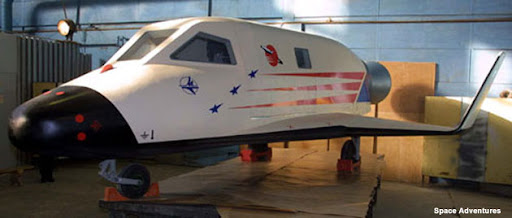
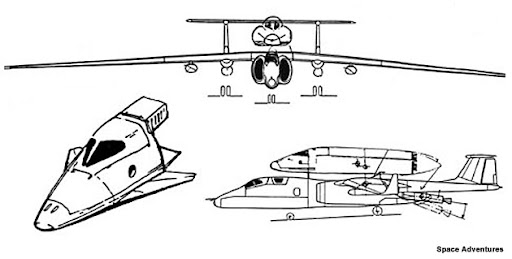
In addition to brokering deals for ISS-bound millionaires, Space Adventures has also supported a pair of spacecraft development efforts: the Xerus vehicle with XCOR Aerospace and Cosmopolis XXI (C-21), a multi-passenger space plane designed by Russia’s Myasishchev Design Bureau (MDB).

It is Cosmopolis from which Space Adventures’ Explorer series is derived. Both vehicles are designed to be launched via a parent aircraft – in this case, the M-55X aircraft – much like the SpaceShipOne craft that won the Ansari X Prize.


But while Cosmopolis was designed to carry two passengers and one pilot, Explorer vehicles will haul up to five people to suborbital space.


“It’s actually much more advanced than [Cosmopolis],” Anderson said of the Explorer system. “We haven’t disclosed the design, but that doesn’t mean that we don’t have one. We’re announcing things one at a time.”

MDB is also designing the Explorer spacecraft for Space Adventures and Prodea. The Russian firm assured that the vehicle will come equipped with “several exciting features” to enhance a space tourist’s flight experience.

“Additionally, the safety of the passengers is our chief aim, and the Explorer will make use of several safety systems that we have unique experience in designing and implementing for the last 40 years,” explained MDB chief designer Valery Novikov in a written statement.

Anderson said Explorer vehicle’s development is being supervised by Russia’s Federal Space Agency.

Deriving details

While Space Adventures has not yet released specific details about its Explorer vehicles aside from their intended occupancy and maximum altitude, the fact that they will launch from the same M-55X parent craft hints that they may be similar to Cosmopolis, though the addition of two seats aboard Explorer suggests a larger cabin.

For Cosmopolis flights, the 55,115-pound (25,000-kilogram) M-55X aircraft was slated to launch the 4,409-pound (2,000-kilogram) suborbital craft from an altitude of about 16.7 miles (27 kilometers). The entire flight, from takeoff up to 62 miles (100 kilometers) and landing, was expected to last about 6.5 hours.

Whether those details will hold for Explorer flights – which are expected to offer up to five minutes of weightlessness at a time – remains to be seen.

“More information will be announced in the future,” Space Adventures spokesperson Erin Lundberg told SPACE.com.

Space Adventures officials did say that it intends to sell Explorer vehicles to operator companies to conduct the actual spaceflights.

At least two passengers are apparently already set to ride aboard a Space Adventures-related suborbital flight.

According to an October 2005 report by China Daily, Chinese businessman Jian Fang reportedly paid $100,000 for a 90-minute suborbital spaceflight with Space Adventures. In September 2005, the space tourism firm itself announced that Brian Emmett of Mountain View, California had won a seat aboard a future suborbital vehicle.

Both flights were reportedly set for 2007 at the time. Space Adventures officials said they have received about 200 reservations for future suborbital flights from individuals representing 18 different countries.

Spaceport Shuffle

Deals are also in place to construct a $265 million spaceport at the Ras Al-Khaimah International Airport in Ras Al-Khaimah – the northernmost of seven emirates the United Arab Emirates (UAE) – with a $115 million facility to be built near Singapore’s Changi International Airport, Space Adventures officials said.

“After we initiate operations here, we look forward to expanding operations outside of the United Arab Emirates,” Sheikh Saud Bin Saqr Al Qasimi, crown prince of Ras Al-Khaimah, in a statement.

Anderson said Al Qasimi has been extremely supportive and invested $30 million into the spaceport project.

Space Adventures is also working with a consortium of investors in Singapore to develop Spaceport Singapore, a facility that will offer not only suborbital spaceflights, but also astronaut training, parabolic flights to simulate weightlessness, and other high-altitude attractions.

“With the proposed Spaceport Singapore, we now stand at the threshold of an unprecedented opportunity to launch into space practically from our own backyard,” said Lim Neo Chian, chief of the Singapore Tourism Board, in a statement.

The announcement of both spaceports does not rule out American spaceport in Space Adventures’ future, though several unrelated projects are already underway in the U.S.

“We’re still analyzing potential locations,” Anderson said. “We’d love to be opening a spaceport in the United States.”

In the meantime, the space tourism firm is pressing ahead with its orbital program.

Japanese entrepreneur Daisuke “Dice-K” Enomoto is set to be the firm’s next paying passenger to the ISS in October. His flight will follow those of Olsen, South Africa’s Mark Shuttleworth in 2002 and U.S. businessman Dennis Tito in 2001.

“There is still a market for orbital spaceflight and I certainly hope it will continue,” Anderson said.


Wednesday, August 10, 2005

Space Adventures Offers Up the Moon for Future Tourists

By Ker Than
Staff Writer
posted: 10 August 2005
04:13 pm ET


NEW YORK—The company responsible for brokering the first two space tourist missions to the International Space Station announced today plans for a mission that will send space tourists to the far side of the moon at the cost of $100 million per person.

Deep Space Exploration (DSE)-Alpha will be the first in a series of deep space missions being planned by the Arlington, VA-based Space Adventures. The mission could launch as early as 2008 and will be conducted in cooperation with the Russian Federal Space Agency (FSA) and the Russian space design bureau Energia.

The company is best known for sending space tourists—Dennis Tito in 2001 and Mark Shuttleworth in 2002—to the International Space Station (ISS) for $20 million.

If launched, the mission will mark the first time humans have orbited the moon in more than 30 years.

“It’s been far too long,” said Space Adventures CEO Eric Anderson. “It’s time to go back.”

The mission will be flown by a Russian cosmonaut and will carry two commercial passengers. One of the prospective clients is Greg Olsen, the technology entrepreneur and millionaire is scheduled to become the world’s third space tourists this October. Olsen booked his trip through Space Adventures.

Olsen, who also attended the press conference, said he was intrigued by the possibility of traveling to the moon.

“People have been asking me if I’m going to do this,” Olsen said. “My answer is that I’m really interested but one flight at a time.”

Living conditions on the spacecraft will be tight, as the interior will have a volume of approximately 350 cubic feet, about as large as the inside of a large SUV.

Like the company’s previous orbital missions, DSE-alpha will rely upon the Soyuz TMA spacecraft, the latest incarnation of the Soyuz spacecrafts that have served as the workhorses of the Russian space program since the 1960s.

Unlike other Space Adventure missions, however, DSE-Alpha will also use an additional propulsion module known as the Block DM to provide the extra thrust required to reach the moon.

Anderson said that the five-fold price increase for the lunar mission over that of previous orbital mission is justified because it will require the launching of two spacecrafts instead of one.

Anderson also pointed out that seats on the orbital flights to the ISS were part of missions already bought and paid for by the Russian government.

Final mission details are still being worked out, but two scenarios are possible, Anderson said. One requires the crew to dock at the ISS for up to 14 days before launching off on an approximate six-day flight to the moon.

In the second scenario, the ISS will not be used and the crew will orbit the Earth for approximately three days before blasting off for the moon.

Anderson told SPACE.com that the decision of which scenario is ultimately used will depend on a variety of factors, including who will fly and the status of ISS when the first mission occurs.

Depending on which scenario is used, the Soyuz rendezvous with the Block DM will either occur at the ISS or in low earth orbit.

Anderson said that prior to the actual mission, a rigorous systems test will be conducted on both the Soyuz and Block DM would. Practice rendezvous’ between the two spacecrafts, as well as a unmanned lunar flight, are also planned.

Anderson said his company has identified over 1000 individuals who have the financial resources to afford such a flight.

Also present at the news conference were FSA press secretary, Vyaheslav Davidenko, and Energia President, Nikolai Sevastyanov.

Sevastyanov told SPACE.com that the Russian government is currently developing several lunar and deep space programs, including production of a reusable spaceplane dubbed “Kliper,” as well as plans for a lunar settlement.

Asked whether he expects Space Adventures to be involved in any of those plans, Sevastyanov said he had no objections.

“If they are interested and have the wherewithal, they are very welcome,” he said.