要说什么
杯子都已经空了
闭上眼睛心里下起大雪天寒又地冻
是不是到了
爱情结帐的时候
只剩下各自买单的寂寞
为什么当我推开门
他没有来拉住我
他还不懂还是不懂
离开是想要被挽留
如果开口那只是我要来的温柔
他还不懂永远不懂
一个拥抱能代替所有
爱绝对能够动摇我
要用什么
融化这一片沉默
在四周的冷空气里叹息化成烟飘走
过去的种种在心里滚成雪球
怕还没说话泪就会先流
爱不是他给得不多
是不知道我要什么
都是背了太多的心愿
流星才会跌的那么重
爱太多心也有坠毁的时候
在第一时间拯救我
With a fleet of rocketships and two spaceports on the way, a high-flying tourism firm is taking passenger spaceflight to the next level.
In the last week, the Arlington, Virginia-based firm Space Adventures has announced plans for a new suborbital spacecraft and spaceports near major airports in the United Arab Emirates and Singapore that, it hopes, will draw eager customers seeking the space experience.
“These sites in the United Arab Emirates and in Singapore are just the initial steps [for private spaceflight],” Space Adventures CEO Eric Anderson told SPACE.com. “They are essentially the stead to rally around.”
At the heart of Space Adventures’ plan is the Explorer spacecraft, a vehicle to be developed under a partnership with the Texas-based Prodea – a firm founded by the Ansari family, which put up the $10 million prize money and their namesake for the suborbital X Prize competition.
“We are absolutely building a global market,” Anderson said. “I think it’s a huge milestone in private spaceflight.”
Space Adventures has been a staple of sorts for orbital space tourism, helping millionaires reach the International Space Station (ISS) on 10-day trips with announced costs of about $20 million each. U.S. scientist and CEO Gregory Olsen – who reached the ISS in October 2005 – was the third
and most recent space tourist.
Building on Cosmopolis
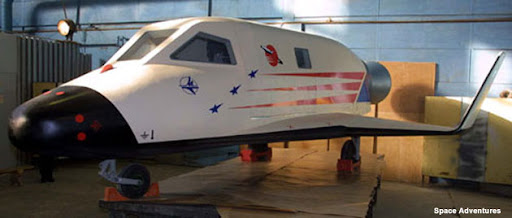
In addition to brokering deals for ISS-bound millionaires, Space Adventures has also supported a pair of spacecraft development efforts: the Xerus vehicle with XCOR Aerospace and Cosmopolis XXI (C-21), a multi-passenger space plane designed by Russia’s Myasishchev Design Bureau (MDB).
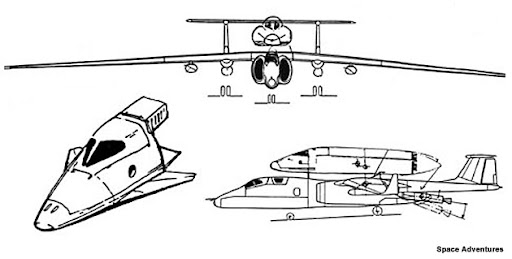
It is Cosmopolis from which Space Adventures’ Explorer series is derived. Both vehicles are designed to be launched via a parent aircraft – in this case, the M-55X aircraft – much like the SpaceShipOne craft that won the Ansari X Prize.
But while Cosmopolis was designed to carry two passengers and one pilot, Explorer vehicles will haul up to five people to suborbital space.
“It’s actually much more advanced than [Cosmopolis],” Anderson said of the Explorer system. “We haven’t disclosed the design, but that doesn’t mean that we don’t have one. We’re announcing things one at a time.”
MDB is also designing the Explorer spacecraft for Space Adventures and Prodea. The Russian firm assured that the vehicle will come equipped with “several exciting features” to enhance a space tourist’s flight experience.
“Additionally, the safety of the passengers is our chief aim, and the Explorer will make use of several safety systems that we have unique experience in designing and implementing for the last 40 years,” explained MDB chief designer Valery Novikov in a written statement.
Anderson said Explorer vehicle’s development is being supervised by Russia’s Federal Space Agency.
Deriving details
While Space Adventures has not yet released specific details about its Explorer vehicles aside from their intended occupancy and maximum altitude, the fact that they will launch from the same M-55X parent craft hints that they may be similar to Cosmopolis, though the addition of two seats aboard Explorer suggests a larger cabin.
For Cosmopolis flights, the 55,115-pound (25,000-kilogram) M-55X aircraft was slated to launch the 4,409-pound (2,000-kilogram) suborbital craft from an altitude of about 16.7 miles (27 kilometers). The entire flight, from takeoff up to 62 miles (100 kilometers) and landing, was expected to last about 6.5 hours.
Whether those details will hold for Explorer flights – which are expected to offer up to five minutes of weightlessness at a time – remains to be seen.
“More information will be announced in the future,” Space Adventures spokesperson Erin Lundberg told SPACE.com.
Space Adventures officials did say that it intends to sell Explorer vehicles to operator companies to conduct the actual spaceflights.
At least two passengers are apparently already set to ride aboard a Space Adventures-related suborbital flight.
According to an October 2005 report by China Daily, Chinese businessman Jian Fang reportedly paid $100,000 for a 90-minute suborbital spaceflight with Space Adventures. In September 2005, the space tourism firm itself announced that Brian Emmett of Mountain View, California had won a seat aboard a future suborbital vehicle.
Both flights were reportedly set for 2007 at the time. Space Adventures officials said they have received about 200 reservations for future suborbital flights from individuals representing 18 different countries.
Spaceport Shuffle
Deals are also in place to construct a $265 million spaceport at the Ras Al-Khaimah International Airport in Ras Al-Khaimah – the northernmost of seven emirates the United Arab Emirates (UAE) – with a $115 million facility to be built near Singapore’s Changi International Airport, Space Adventures officials said.
“After we initiate operations here, we look forward to expanding operations outside of the United Arab Emirates,” Sheikh Saud Bin Saqr Al Qasimi, crown prince of Ras Al-Khaimah, in a statement.
Anderson said Al Qasimi has been extremely supportive and invested $30 million into the spaceport project.
Space Adventures is also working with a consortium of investors in Singapore to develop Spaceport Singapore, a facility that will offer not only suborbital spaceflights, but also astronaut training, parabolic flights to simulate weightlessness, and other high-altitude attractions.
“With the proposed Spaceport Singapore, we now stand at the threshold of an unprecedented opportunity to launch into space practically from our own backyard,” said Lim Neo Chian, chief of the Singapore Tourism Board, in a statement.
The announcement of both spaceports does not rule out American spaceport in Space Adventures’ future, though several unrelated projects are already underway in the U.S.
“We’re still analyzing potential locations,” Anderson said. “We’d love to be opening a spaceport in the United States.”
In the meantime, the space tourism firm is pressing ahead with its orbital program.
Japanese entrepreneur Daisuke “Dice-K” Enomoto is set to be the firm’s next paying passenger to the ISS in October. His flight will follow those of Olsen, South Africa’s Mark Shuttleworth in 2002 and U.S. businessman Dennis Tito in 2001.
“There is still a market for orbital spaceflight and I certainly hope it will continue,” Anderson said.


Turin - Your choice of chocolate can reveal much about your personality, including your preferences in bed, psychologists argue.
According to Murray Langham, a New Zealand psychotherapist and author of the book Chocolate Therapy: Dare To Discover Your Inner Self, the choice of a chocolate's shape and filling, as well as how its wrapping is disposed of, reveals much about people's personality traits and moods.
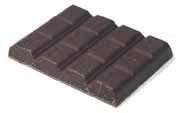
Milk chocolate lovers, for example, tend to be innocent people who like to live in the past. Fans of dark chocolate, on the other hand, are materialistic, problem solvers who are excited by the future. White chocolate aficionados have an innate sense of fairness and believe they have the power of the universe at their command.
Langham says he had his idea after noticing that many of his patients enjoyed a close relationship with chocolate.
"I started asking my clients what sort of chocolates they like to eat," he once told the British daily The Express, "and I began to notice that people chose similar confectionery according to their personality".
Langham says he found that by observing his patients' chocolate habits he could discover more about their personalities than by just asking the patients straightforward questions about themselves, as psychologists tend to do in regular therapy.
Langham, who says his best-selling book has attracted widespread interest among American psychotherapists, says the choice of filling and shape also reveals much about one's personality and state of mind.
Oval-shaped lovers, for instance, are social and sensual. Those who prefer a coffee filling are open-minded, but also impatient, anxious and immature.
A perhaps more controversial aspect of "chocolate therapy" also holds that the way a chocolate's wrapper is disposed of brings out people's attitudes about sex.
Those who crinkle the wrapping before throwing it away tend to have too many thoughts on their mind and are unable to concentrate in bed. People who roll it into a ball, on the other hand, are having a boring sex life.
The implications of "chocolate therapy" are being discussed at "CioccolaTo", a trade fair taking place in the Italian capital of chocolate, Turin, until March 14. - Sapa-dpa

BOSTON (February 17, 2002 9:04 a.m. EST) - There's more evidence that cocoa rich in cholesterol-battling antioxidants helps ward off some of the factors associated with heart attacks and stroke, scientists lecturing here Friday during the annual meeting of the American Association for the Advancement of Science said.
The antioxidants in chocolate are called flavonoids, potent plant compounds also found in tea, red wine and some fruits and vegetables. Studies show that flavonoids slow the processing of "bad" LDL cholesterol into material that clogs the arteries, and at the same time make blood platelets less likely to clump and cause clots.
"What we're finding, though, is that all flavenoids are not created equal. There are some foods that are richer in them, and seem to be more biologically active, and cocoa is right up there," said Carl Keen, chairman of the nutrition department at the University of California-Davis.
Keen compared the reactions of platelets to a flavanol-rich cocoa drink and a blood-thinning, 81-milligram dose of aspirin, and found similar reactions in a group of 20- to 40-year-olds.
"What we don't know is just what the dose-effect of this might be over a longer period of time," Keen said. "We have some research that shows eating foods high in flavanols is good for the arteries, but we don't yet know what the minimum amount is you can consume to have the effect you want, or what happens if you consume at these levels for weeks or months."
Another chocolate researcher, Dr. Norman Hollenberg of Brigham and Women's Hospital here, reported findings that flavanols may be associated with controlling another chemical that regulates the arteries, nitric oxide.
The compound is critical for healthy blood flow and pressure, Hollenberg said. "If our research results continue to support a link between consumption of flavanol-rich cocoa and nitric oxide
synthesis, there could be significant implications for public health." Both Keen and Hollenberg used a special experimental cocoa supplied by the Mars candy company that is not yet available to the public.Dark chocolate, which is typically a bit more expensive and not quite as sweet, is richest in flavonoids because of the way it's processed. Milk chocolate, which also has added butterfat, contains fewer flavonoids, while cocoa powder and chocolate syrups are currently processed with a method that removes most of the flavonoids.
As far as the fat in dark chocolate goes, it's mostly a saturated vegetable fat that behaves in an artery-friendly way, like olive and canola oils. Hollenberg began studying the effects of cocoa as part of a high blood pressure study on members of the Kuna tribe of Panama. He noted that members of the tribe who lived on the isolated islands almost never developed hypertension as they aged, while those who moved to urban Panama City did develop age-related high blood pressure. His team learned that in their homelands, the Kuna consume large amounts of cocoa.
And it was observed that the island-dwelling Kuna had significantly higher levels of nitrite-nitrate in their blood, which helps keep pressure down.
Back in Boston, people in a study group have nitric oxide numbers pretty much like those seen in the urban-dwelling Kuna. Hollenberg's team tried having them consume either high-flavanol or low-flavanol cocoa, and saw a significant response in the nitric oxide flow over a short time.
Now the scientists are preparing for a more specific study of the active ingredient of the compounds to conclusively determine if regulating nitric oxide with flavanols has a positive impact.
Keen noted that while early studies of flavanols showed they were beneficial, "it's only been in the last few years that we've been able to isolate some of the active components of flavanols and do the biochemistry that's needed to understand the mechanisms.
"Of course, it's still possible that flavanols are greater than the sum of their parts, and that they work well in the blood precisely because they are together," Keen said.
♥ CHECK THIS OUT!!!
♥ PREVIOUS POSTS